Category Archives: General

How we survive

By Zubeida Mustafa

IN these trying times of lockdowns, I have found relief in books. Currently, Michelle Obama has brought me the comfort I was looking for. America’s former first lady’s memoir, Becoming, grips your attention with its lucid style. It also gives you a graphic insight into the life of the African-American community, whose struggle has fascinated me since Martin Luther King made his famous ‘I have a dream’ speech more than 50 years ago.

Continue reading How we survive

Those festivals

By Zubeida Mustafa

IN his keynote speech at the recent Karachi Literature Festival (KLF), historian William Dalrymple spoke of the litfests that have mushroomed in South Asia in a “fantastic” way. There is no denying that these literary events are crowd-pullers. Dalrymple estimates that India, which initiated the trend with the Jaipur Literature Festival — the most well attended in the world — in 2004, now has 60 litfests a year. He spoke of 10 being held in Pakistan, though I am not clear how he arrived at this figure.

Continue reading Those festivals

After the war in Afghanistan

By ‎Zubeida Mustafa

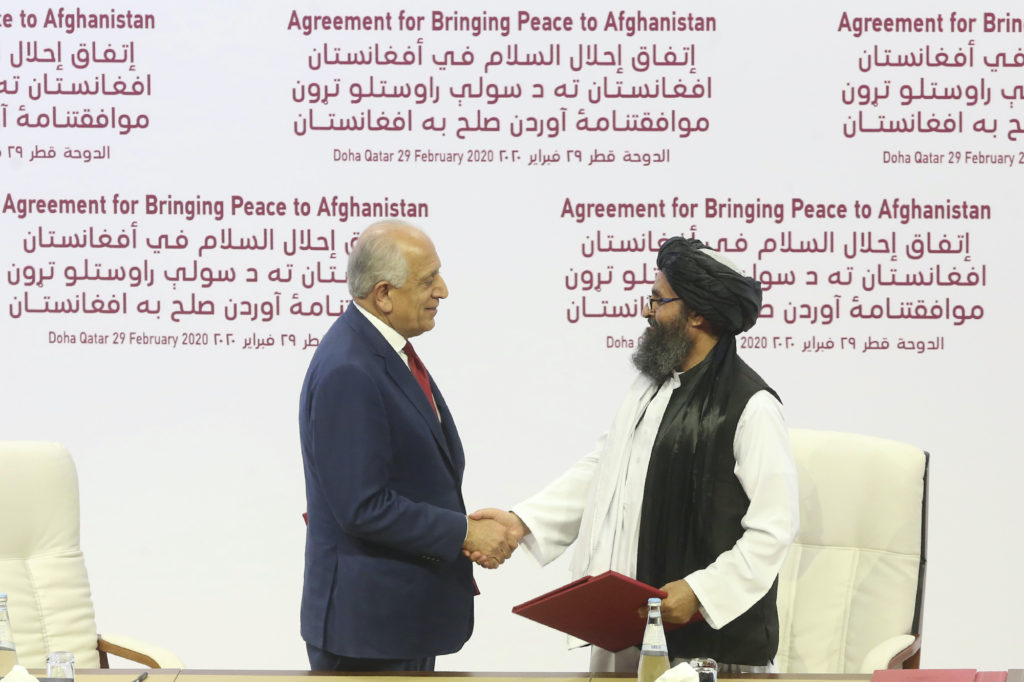
Taliban and U.S. officials shake hands over Afghan peace deal
U.S. peace envoy Zalmay Khalilzad, left, and Taliban leader Mullah Abdul Ghani Baradar shake hands after signing the peace agreement. (Hussein Sayed / AP)

Truthdig is proud to present this article as part of Global Voices: Truthdig Women Reporting, a series from a network of female correspondents around the world who are dedicated to pursuing truth within their countries and elsewhere.

In normal times, Saturday would have been a red-letter day. The deal signed by the Taliban and the U.S. in Doha, Qatar, promised peace to a land torn by war for over four decades.

Continue reading After the war in Afghanistan

Green-black-khaki: the colours of politics

  By Rifaat Hamid Ghani  

                        IF one begins by saying the civil politician is as much to blame for military influence in politics as any army general, one can then stop mincing words and — having implicitly ceded that army boots do march upon civil political space — embark on a less coy discussion of this aspect of Pakistan’s democratic march with reference to the pulsating present not just the detonated past. What have the civil and military learnt from abounding exemplified lessons of history and how do they use that knowledge? Bear in mind that the canvas common to both is the space Pakistan’s people inhabit. They should be calling the shots – but not in cross-fire. Which is all that civil politics as played presently by professional politicians seems to be doing: Is there a Cheshire cat grin on military faces?  

            Justice Munir early on provided the doctrine of necessity as just recourse for dissolving assemblies, legislative or otherwise. General Ayub, the trailblazer of military political interventionism who as C-in-C helped President Iskander Mirza shelve Pakistan’s very first much belated but non-durable constitution of 1956 in 1958, wasn’t much bothered about cosmetic constitutional camouflage. But such is the law of popular political gravity, he came to see wisdom in promulgating a civil presidential system with a customised rule-book. They called it the 1962 Constitution. When parliamentary nostalgia and popular discontent reached a critical mass, Bhutto, founding the PPP, rode the civil storm; but the instrument for a return to regard for the will of the people was an intra-martial agreement. The army, commanded by General Yayha, structured with a legal framework order, voluntarily oversaw a return to civil electoral politicking, with elections duly held as promised in December 1970 which are still undisputedly deemed historically pristine and translucent. They also turned out to be popularly unacceptable and the eastern wing parted from the western wing.             

Continue reading Green-black-khaki: the colours of politics

Reflection

By Rifaat Hamid Ghani

IT is false to say those were lawyers attacking doctors or doctors under attack on December 11th in Lahore. It was us: people like you and me were doing that to people like you and me in and to our hospital. Something increasingly toxic within and around us is generating an atmosphere of violence. Personal self-respect has degenerated into self-righteous entitlement and intimidatory demand. Can we arrest this slide into the bestial before we all become completely desensitized or submerged?

               When and where did it begin? It is chastening to remind ourselves that an angrily contested partition was integral part of the subcontinent’s venture into self-rule. Simply put: this vast subcontinent’s major Muslim minority and heavily Hindu majority did not trust each other enough to share a common space. That was 1947. In 2019 the polity is still wrangling violently within its separate states, failing to resolve a sociopolitical equation of common human interest: We can justly point a finger at the subcontinent’s cannabilistic mother India; emergent Pakistan; Bangladesh; Nepal; Bhutan; and even a not that safely enough offshore Sri Lanka. Why then is the rampage at Lahore’s PIC particularly horrifying?

Continue reading Reflection