
By Zubeida Mustafa
In a Third World country, “health for all” cannot be taken for granted, given the iniquitous provision of welfare and health care, combined with rampant poverty. So it comes as a surprise to me, a citizen of Pakistan, that health care should be the subject of such a fierce debate in the United States, where many of the problems faced by Pakistanis do not exist. This world power, after all, has the resources to provide the best health care for its people, if it wants to.
Yet Truthdig’s search engine brought up 708 results for the last few months when I keyed in the words “health care.” It was eye-opening. It is clear that, despite the heated argument surrounding the Affordable Care Act, or “Obamacare,” that marked the advent of the Trump administration and the president’s failed efforts to repeal it, the controversy has not been laid to rest.
Michael Winship’s article titled “One Nation in Sickness and in Health” very cogently sums up America’s health care problem. “It’s a given that our health care system, one-sixth of our nation’s economy, is a nightmare,” he writes. Winship attributes this “nightmare” to the “stinkers out there so quick to abuse the system and make a quick big fast buck, especially in the pharmaceutical and health insurance industries.” Winship argues that reforms are necessary to attain the ultimate goal of making “universal health care a right for every one of us.”
Ironically, we in Pakistan face somewhat similar problems to the U.S.—albeit on a humongous scale: The factors that have led to a flawed health care system in Pakistan are different. They are mainly scarce resources, an expensive private sector for a handful of elites, no feasible medical insurance and a government that lacks political will and sensitivity to upgrade the existing ramshackle health care system
Health reforms in Pakistan have met equally formidable resistance as in the U.S., where reforms in the health sector have always triggered major political battles. We in Pakistan have done slightly better at creating health care reforms from time to time, some of which were perfect on paper. But alas, these reforms were never implemented, even decades later.
So our quest for a health utopia continues. In an ocean of despondency, ill health and morbidity, we Pakistanis, however, have a few islands of excellence. One institution in particular has the greatest potential when it comes to offering health solutions in universally challenging circumstances: the Sindh Institute of Urology and Transplantation (SIUT). The SIUT, a tertiary care hospital based in Pakistan’s most populous city, Karachi, has been sustained for more than four decades, during which it has grown incrementally in size and reach. The principles that underpin the SIUT’s model of health care could be adapted, adjusted and modified by any country to suit its own circumstances.
As a starter, one needs full commitment to the precept spelled out by the World Health Organization: “Health for all.” Many Americans fight to uphold this concept as a universal right. And health care should be seen as a fundamental right of all human beings and be the ultimate goal of all states. Dr. Adibul Hasan Rizvi, founder and director of the SIUT, labels it the “birthright of every person.” This translates into his institute’s motto: “We will not allow anyone to die because he cannot afford to live.”
Rizvi adds, “We offer health care free with dignity to every one irrespective of colour, creed, caste or religious beliefs.”
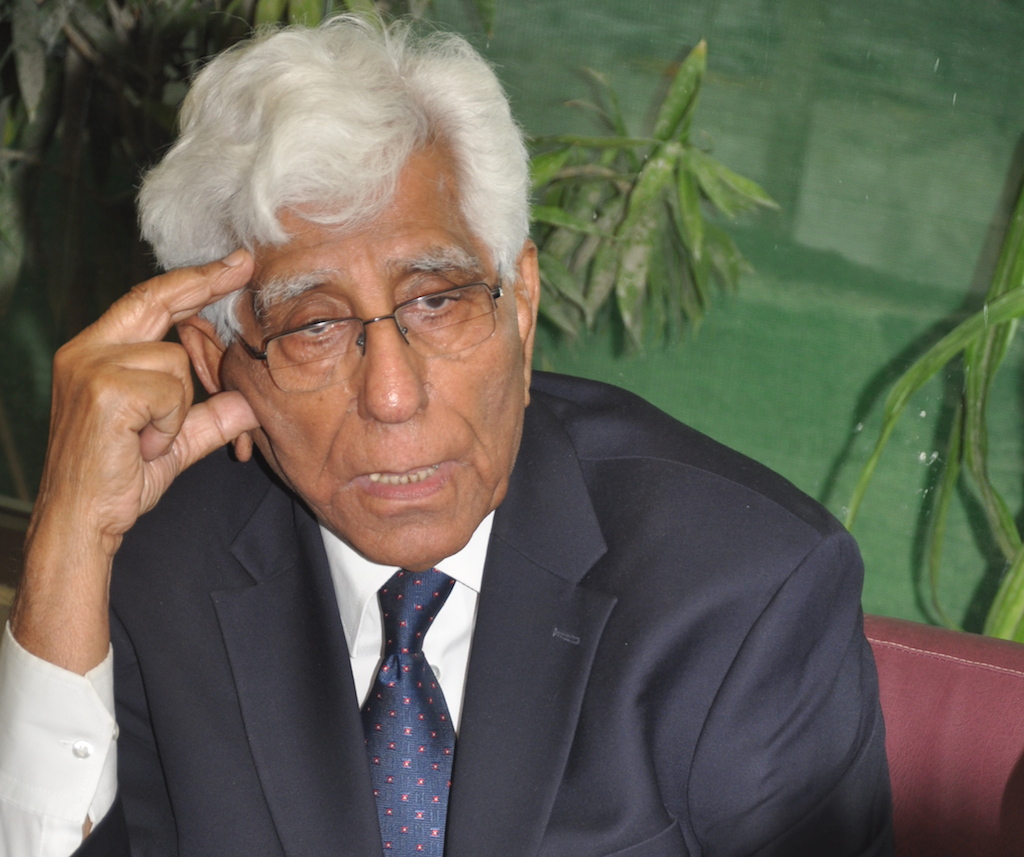
Dr. Adibul Hasan Rizvi, founder and director of the SIUT. (SIUT)
And he means it. This is proved by the presence of mammoth crowds that throng the SIUT’s premises in search of succour. All treatment is free, despite the state-of-the-art technology involved, which is expensive. As might be expected, the overwhelming majority of the patients are poor, coming from the 39 percent of Pakistan’s population classified as suffering from multidimensional poverty, who have traditionally been denied adequate health care. At the SIUT, even the most costly laboratory tests or surgical procedures are provided for free, and the ailing are treated with compassion and dignity. “This approach hastens the healing process,” a bladder cancer survivor confided in me after he was pulled out of the jaws of death in this hospital. The SIUT’s Hanifa Suleman Dawood Oncology Centre offers cutting-edge technology for cancer treatment, and last year treated 34,420 patients free of charge.
In 2016, the last year for which consolidated figures are available, 1.1 million people received treatment at the SIUT. Services provided included 8.8 million laboratory tests, 367 renal transplantations and 302,037 dialysis sessions. These can be frightfully expensive, especially transplantation and post-transplant medications, which have to be taken for life. By making its services available and free of charge, the SIUT, with its high success rate, has saved hundreds of thousands of lives. By adopting this approach it has also intervened in the illegal organ trade in Pakistan. The southern province of Sindh, where the SIUT is located, has never experienced the ignominy of hosting an organ bazaar.
How has the SIUT’s miracle worked? The institute is a partnership between the government and the common man. The government facilitates the working of the institute, an autonomous body in the public sector, by partially funding it through budgetary allocations, physical infrastructure where available and project grants. The community’s role is crucial. While the affluent members of the public donate generously, the poor also drop a five-rupee coin in the collection box—such boxes are scattered all over the city. Businesspeople and industrialists have donated buildings and medical equipment worth millions. This combined effort makes it possible for the SIUT to expand—it now has 12 premises under its wings, with three outside Karachi. Donations enable the SIUT to provide free treatment to the community, which reciprocates by showing a sense of ownership toward it.
To instill this confidence in the public, the institution must be seen as delivering on its promises. Any health care system that benefits the underprivileged inspires confidence in the donors and becomes sustainable in due course of time.

People gathered outside the outpatients department of the Sindh Institute of Urology and Transplantation in Pakistan. (SIUT)
No donor wants to feel cheated, which is why wastefulness and profiteering are the biggest enemies of such a relationship. To sustain confidence, expansion at the SIUT is incremental and strictly need-based. It has grown from its initial six beds to 900 beds today. Other health care facilities have tried to emulate the SIUT, but after many adjustments, Rizvi says the viability of the SIUT model is successful because it has been sustained for 42 years, expanding even while the national economy has shrunk. In 1975 the Pakistani rupee was worth almost 10 to a dollar. Today, it is 110.
It is, however a young woman—Aymen Khan, 19—who is the best ambassador for the SIUT. Born with bladder exstrophy, a rare and dangerous bladder condition, Aymen commented, when I first interviewed her five years ago, “To God I owe my birth and to SIUT I owe my health.” Had it not been for the SIUT, Aymen would not have the normal life she leads today as a university student and sports enthusiast. Her family could never have paid her medical bills at a private health care facility.
Source: Truthdig

