After the war in Afghanistan

By ‎Zubeida Mustafa

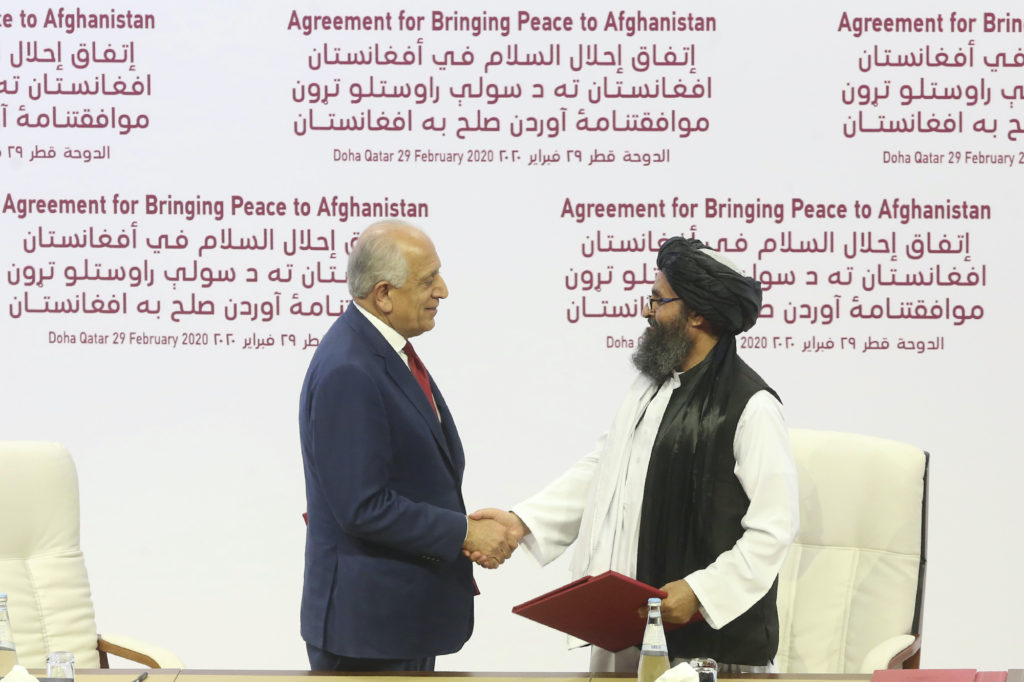
Taliban and U.S. officials shake hands over Afghan peace deal
U.S. peace envoy Zalmay Khalilzad, left, and Taliban leader Mullah Abdul Ghani Baradar shake hands after signing the peace agreement. (Hussein Sayed / AP)

Truthdig is proud to present this article as part of Global Voices: Truthdig Women Reporting, a series from a network of female correspondents around the world who are dedicated to pursuing truth within their countries and elsewhere.

In normal times, Saturday would have been a red-letter day. The deal signed by the Taliban and the U.S. in Doha, Qatar, promised peace to a land torn by war for over four decades.

Continue reading After the war in Afghanistan

ASER’s call

By Zubeida Mustafa

THE 2019 Annual Status of Education Report (Aser) launched recently is the ninth in the series. No other knowledge assessment exercise in Pakistan of this nature has been so sustained. Though there was a gap, its overall performance has still been good. It serves as a reliable yardstick to measure the quality of learning in the country especially in the rural areas where the majority of the population lives.

Continue reading ASER’s call

Which language?

By Zubeida Mustafa

THE medium of instruction in school is once again being hotly debated, not that the issue had ever been resolved. But now that the pro-mother language lobby has gained more leverage over the years, its voice is being heard. That is why passions generated by the language issue cannot be slapped down.

What provoked the controversy this time? It was a report prepared by a subcommittee of the National Curriculum Council on the medium of instruction that caused the ruckus. Later, a member of the NCC described the report as a piece of ‘misreporting’. The so-called wrong report had prescribed English as the medium for quite a few subjects from primary to Grade XII. The regional languages had been omitted totally. It was the latter omission that had led to the deafening furore on social media — and quite understandably so. Mercifully, a clarification was later issued by the government explaining that the question of the languages to be used as the medium had been left to the provincial governments to decide.

Continue reading Which language?

We, the 1.21pc

By Zubeida Mustafa

I BELONG to Pakistan’s 75-plus age group. According to the 2017 census, my contemporaries, who were born in 1944 or earlier, constitute only 1.21pc of the total population of this country. Not a very big number — less than 2.5 million. But we seem to have become a burden for the government that had promised us a ‘new’ Pakistan when it assumed office. Did it mean a ‘young’ Pakistan?

Take my case as an example (mind you I am not alone). I have been a working woman nearly all my adult life. True, the pace of my work has slowed down with age. I am low-visioned too. Nevertheless I continue to contribute to society as best as I can mainly by doing voluntary work in a school for underprivileged children.

Continue reading We, the 1.21pc

Pakistan Is Cleaning Up Trump’s Mideast Mess

By Zubeida Mustafa

Truthdig is proud to present this article as part of its Global Voices: Truthdig Women Reporting, a series from a network of female correspondents around the world who are dedicated to pursuing truth within their countries and elsewhere.

The Middle East has always been a difficult region for the West, especially for the United States. During the Cold War era, America’s efforts to establish its hold over the region’s key oil-producing countries backfired, resulting in anger and resentment in those countries. Be it the CIA-backed coup to overthrow the Mossadegh government in Iran for nationalizing the oil industry in 1953 or Charlie Wilson’s war to oust the Soviets from Afghanistan in the 1980s, the results have been devastating for the U.S. The repercussions from these American campaigns continue to resonate even today in Afghanistan and Iran. Are the two connected in any way?

Continue reading Pakistan Is Cleaning Up Trump’s Mideast Mess