All posts by Zubeida Mustafa

Amazed in the maze


By Rifaat Hamid Ghani   

Pakistan’s democratic advances and retreats are usually perceived in terms of a tussle between power-belts: a civilian establishment comprised of what– post lateral-entry– we may no longer justly call mandarins, enabled by and facilitating administration and policy for an electorally empowered party leadership: now called chors and dakkus. (Party activists, dissidents, and turncoats of lesser stature we could soon be calling raillu kattas.)  In the scales for charge of the governmental process is the military establishment.

We still term it the khakis. Notwithstanding the fact that the last military coup was essentially a day-long airborne drama, those clad in blue and white do not emerge as coup-Caesars. Perhaps what really matters is what you have on the ground — or the ground realities of the political field.  What are these and who determines them? Supposedly in the electoral democratic process the voters. But who enfranchises and disenfranchises?

Continue reading Amazed in the maze

No guns, please

By Zubeida Mustafa

QAMAR Zaman is the father of an infant boy. He works in Karachi’s Defence Authority’s Phase 4 Commercial Area. He had just finished his duty at 6pm on June 10 and had stopped to purchase vegetables for his wife to cook for dinner, when he was knocked out by a hail of gunshots. For him everything went black thereafter.

He later learnt that a guard before a mobile shop close by had accidentally pulled the trigger claiming that he did not know that his gun was loaded. He had just received the weapon from his colleague who was going off-duty.

Continue reading No guns, please

GMO tug of war

By Zubeida Mustafa

WHY should an official of the US Embassy, representing the Department of Agriculture, be going overboard to ‘collaborate’ with Pakistan on projects involving genetically modified maize? This unwanted advice seems to be seedy business at a time when there is a tug of war taking place between various lobbies in the agricultural sector.

Even more regrettable is that in the past such dubious overtures by biotech giants have been extended to too many people whose integrity is in doubt. Quite a few were elected representatives of the people who went ahead to change the Seed Act in 2016. The legality of this move has now been challenged by the farmers in a court of law. The amendments in the act paved the ground for introducing GM seeds in the country.

Moves are now afoot to win over opinion in the quarters that matter. This time the target is maize, one of our best food crops next to wheat and rice. The battleground is in the highest quarters. Pakistan produced 6.1 million tonnes of maize in 2018 showing a yield per hectare of 5MT (about 2MT per acre). This was 2MT in 2003. The Philippines which switched over to GM corn in 2003 could increase its yield per hectare from 2MT to only 3MT in the same period.

Continue reading GMO tug of war

Twitter diplomacy

By Zubeida Mustafa

The battle of tweets we have been witnessing of late, reminds us that we have certainly come a long way from the style in which diplomacy was conducted since 1648. That was the year when the Peace of Westphalia launched the modern secular sovereign state system. It introduced new guidelines for states in their dealings with one another. They demanded “accuracy, calm, patience, good temper, modesty” from an ideal diplomat, as defined by Harold Nicolson, the British diplomat famous for his books and diaries.

Donald Trump’s twitter page in Washington, DC using a Game of Thrones-styled montage. In April 2019 the US President tweeted “Game Over” declaring himself fully vindicated in the investigation into Russian election meddling and alleged collusion in the 2016 presidential elections.

Continue reading Twitter diplomacy

Development with dignity

By Zubeida Mustafa

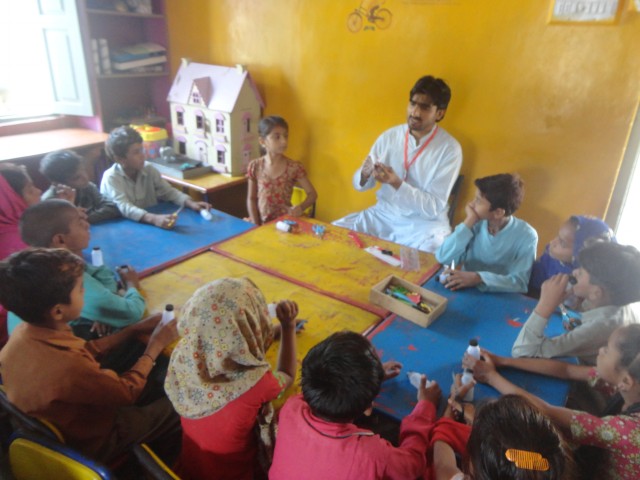
Asad Ali teaches an arts and crafts class in Khairo Dero. (Courtesy of Zubeida Mustafa)

Asad Ali, a young man in his 20s, has a passion for teaching. He is a high school graduate and has no teacher’s training degree, but he has compassion and inborn pedagogic skills that endear him to his students. His father wanted him to join the army, but Ali preferred his classroom to the battlefield. If Pakistan had more teachers with his commitment, the country would be a different place altogether.

Ali would be a failure in the postmodern education system the Pakistan government is making futile attempts to create for a people still stuck in the medieval ages. Had Ali managed to adjust to the prescribed system, his students in Khairo Dero—the village in Sindh where he lives and works—would be unable to relate to him as they do now.

Continue reading Development with dignity