Category Archives: Human Rights

At people’s doorstep

By Zubeida Mustafa

KHALID, who lives in Shikarpur, suffers from end-stage kidney failure. His ailment was diagnosed at the Sindh Institute of Urology and Transplantation, Karachi. I met Khalid at SIUT, Sukkur, where he was on dialysis. He is fortunate to have a donor — his younger brother. But Khalid has to wait for a few months more till his sibling comes of age.

Until SIUT, Sukkur, became operational in 2012, patients like Khalid had to visit Karachi for dialysis, and camp out on the streets. Today, the travel time has been cut immensely saving patients a lot of hassle. This is what the director of SIUT, Dr Adib Rizvi, terms “taking medical facilities to the people’s doorstep”. Had it not been for the SIUT’s presence in Sukkur, Khalid would have become a victim of homelessness as well.

Establishing SIUT, Sukkur, was an innovative response to the need of the people of Sindh. Since SIUT holds human life valuable and healthcare as the people’s birthright, the Khalids of society “are not allowed to die because they cannot afford to live”. Dr Rizvi anticipates the needs of his patients and responds accordingly.

Picture courtesy: sukkurblog.blogspot.com
To make dialysis accessible, he conceptualised a network of satellite centres in various localities of Karachi to save patients the trouble of commuting from far-flung places for this procedure twice a week. When records showed that 60pc of the patients were travelling from outside the city, mostly from Sindh, in the absence of similar facilities closer to home, the quest for a solution was launched.

This took the SIUT team to Sukkur where the Chablani Maternity Home was discovered in a decrepit state. The Sindh government was approached and much planning, renovation and reconstruction transformed this medical facility into a modern hospital that is a miniature version of SIUT, Karachi, with similar facilities and commitment to service.

This was in line with the SIUT’s need-driven approach and its philosophy of not turning back any patient who comes in search of relief from pain. With the patient-load growing as the incidence of disease in Pakistan escalates, SIUT, Sukkur, has proved to be a welcome addition to Sindh’s healthcare system.

When I visited it recently, I found it to be an oasis of modernity with state-of-the-art equipment in a sea of squalor and neglect. You enter the gate, which is barely visible in the flood of encroachments outside, and you are in another world of peace and horticultural beauty.

Many of the facilities that SIUT, Karachi, boasts of are also present in SIUT, Sukkur, which is a full-fledged 36-bed hospital that reported 1,256 indoor admissions in 2012. That year 33,918 patients went to the thrice-a-week outpatient clinic, 16,403 dialysis sessions were performed, 2,400 patients received lithotripsy, the laboratory carried out 111,913 tests and 4,254 surgeries were performed supported by diagnostic radiology services

The only conspicuous omission is transplantation. Dr Iqbal Daudpota, who volunteered to move to Sukkur as the coordinator, assures me that transplantation surgery can be started any time it is needed. As is the case in SIUT, Karachi, all services are provided free of charge with dignity.

Since a key feature of the SIUT model is the professionalism, dedication and compassion of the staff, the postings are controlled by Karachi. The staff is posted in Sukkur by rotation from Karachi. Dr Adib Rizvi, who leads by example, travels by train to Sukkur every Wednesday night for his OPD on Thursday, to return to Karachi the next day. Some of the surgeons in his team stay on to return home a week later. Thus the rota goes on.

SIUT, Sukkur, has reinforced the belief that the government-community partnership model that Dr Rizvi has been advocating is possible. The SIUT’s ethos has impressed the community in Sukkur which has responded generously with donations.

Two donors, Zahid Iqbal Choudhri and Munawwar Khan, have never let the institute down in times of crisis which are common occurrences in Pakistan. As for the patients who have never experienced such compassion and care from the medical profession ever before in their life, the SIUT is a blessing. What is important for many of these downtrodden people is that the SIUT’s philosophy facilitates excellent services without imposing any charges on them.

The SIUT model is doable if health professionals imbibe the ethos needed to provide the best services for no charge and with compassion and dignity. This calls for adopting cost-cutting strategies and shunning ostentation that make an institution self-sufficient. This is how the SIUT has won the confidence of the community in Pakistan which is reputed internationally for its generosity in philanthropy.

The writer is the author of The SIUT Story: Making the ‘Impossible’ Possible

Source: Dawn
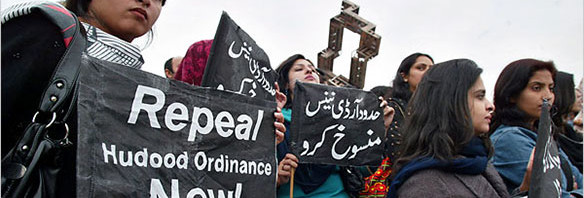
Revisiting the Women’s Movement

By Zubeida Mustafa

PAKISTAN is a dichotomous world. This is a country that has produced a woman prime minister – the first to be elected in a Muslim state. Its predominantly male parliament – the lower house – unanimously adopted a bill against domestic violence four years ago, but it failed to become law because the upper house refused to take it up. Its academia are now overflowing with female students – many of them in hijab. But this is also a country where women are murdered for marrying a man of their own choice, where little girls like Malala are shot in the head for going to school and where law makers defend their ‘right’ to bury women alive in the name of honour and refuse to condemn a colleague who has had his daughter killed for wanting a divorce. Continue reading Revisiting the Women’s Movement

Celebrating women’s leadership

By Zubeida Mustafa

The time has come to celebrate women’s leadership in Pakistan because so many of them are in that role to justify a memorable celebration. When I look back to the days when I entered professional life more than five decades ago, I remember that there were so few of us around that it could be quite a lonely spot to be in. Besides, with a few notable exceptions, there were few who could claim to be playing a leadership role. We were the followers until we found our bearings and gained confidence.

It was, however, realized even then that once the barriers are down women who are enterprising will inevitably refuse to hold themselves back and would proceed to seize the opportunity. And they did, with many of them rising to the top on the basis of merit.

In the middle decade of the last century, Pakistan’s statistics stated that only two per cent of the women were in the workforce. Among them the majority was in menial jobs. The picture has changed considerably today. The World Bank estimates that 28 per cent of the women in Pakistan are engaged in what economists  call productive labour. In absolute numbers this is a big jump, but nothing compared to many other countries. If in this scenario there are women in leadership positions it is something to be proud of. Continue reading Celebrating women’s leadership

One year ago…

By Zubeida Mustafa

ON Thursday, March 13, it will be exactly a year to the day when a brutal killer snatched away from us a gentle, soft-spoken soul whose love for humanity was almost legendary.

Perween Rehman has been described as a caring, versatile development worker, a brilliant teacher, an architect who used her professional skills for the poor, an irreplaceable friend and an amazing woman who broke barriers from below. Above all, she was a woman of courage who defied her detractors.

It was after she was no more and the outpouring of grief wouldn’t cease that the world realised what it had lost and how many lives she had touched in the three decades of her professional association with the Orangi Pilot Project. She is still grievously missed. And there has been no closure for us — her family, friends and colleagues. Continue reading One year ago…

Where students come last

By Zubeida Mustafa

If education in Pakistan in 2013 were to be described in a nutshell, it could appropriately be said: “More of the same.”

Nothing really changed in the education sector this year, in spite of the noise made about it. Two years ago an education emergency was announced but it is now plain that nothing came out of it. The claims by the various provincial governments and political parties were no more than hot air.

There is no doubt about the fact that awareness at the popular level about the importance of education for income generation and upward social mobility has grown. Regrettably there is not sufficient realisation of the need for education to be of good quality to create an impact.
Continue reading Where students come last